NEWS

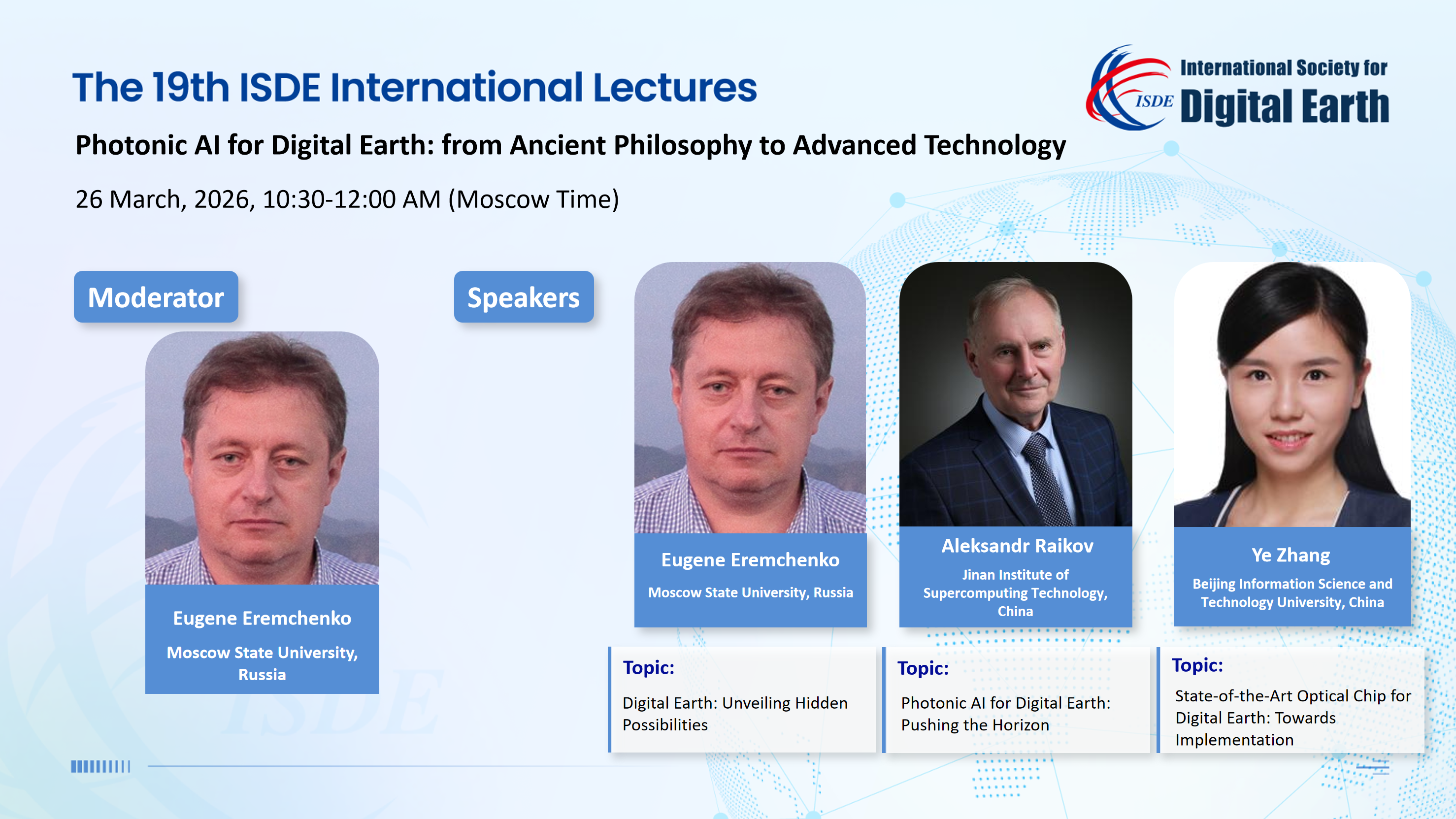
The 19th ISDE International Lectures, with the theme of “Photonic AI for Digital Earth: from Ancient Philosophy to Advanced Technology”, took place on 26 March 2026. This session reviewed the evolution of Digital Earth from an interdisciplinary perspective, highlighting breakthroughs such as holography, Photonic AI, and optical neural network chips, and demonstrating how the convergence of philosophy, science, and technology can expand the horizons of Digital Earth for a sustainable Earth.
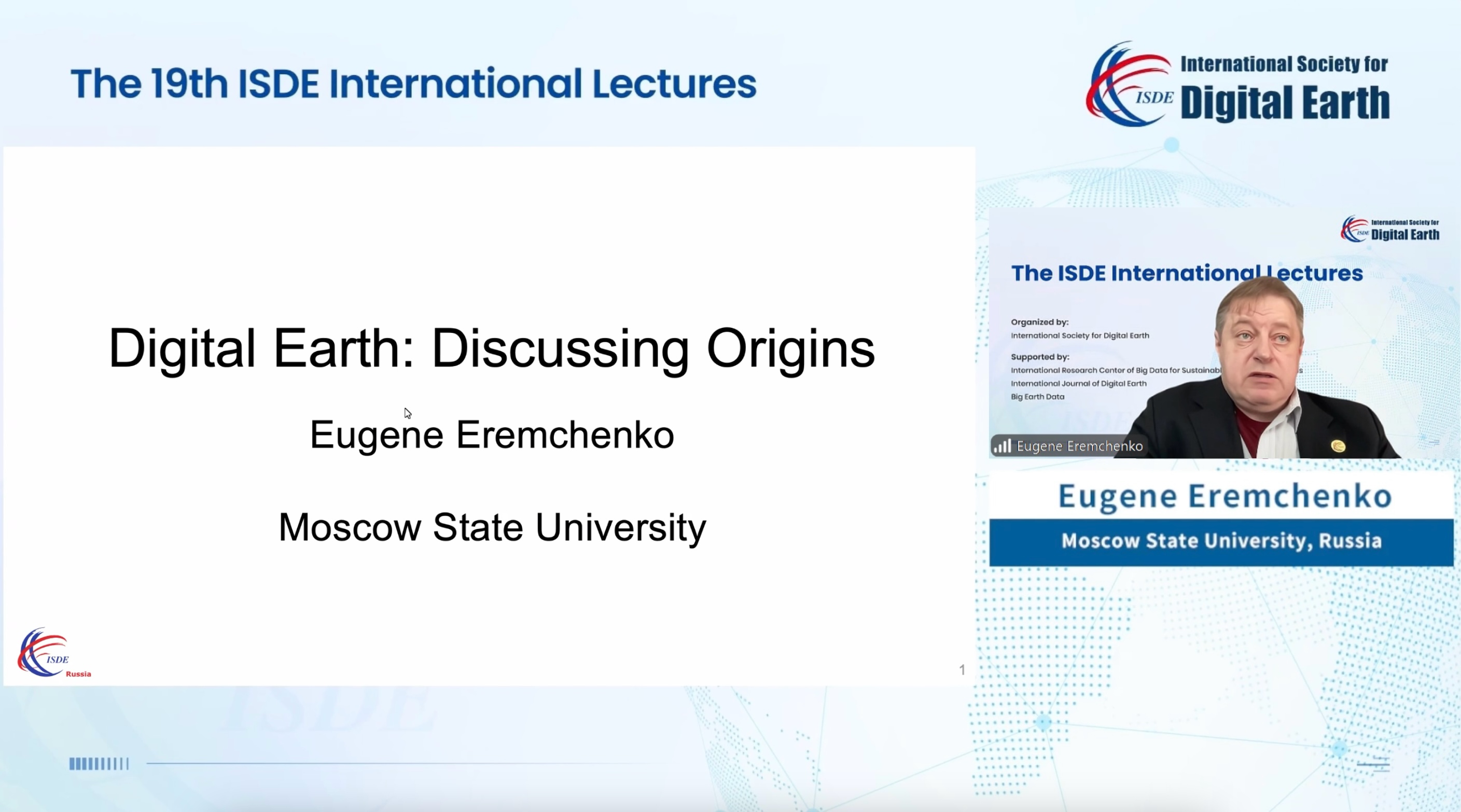
Eugene Eremchenko, a scientific researcher at Lomonosov Moscow State University, Russia and Chair of the ISDE Russian Chapter, gave a presentation titled “Digital Earth: Discussing Origins”. He emphasized the paradoxical nature of the Digital Earth as a holistic system that extends beyond conventional, sign-based digital frameworks. Unlike existing Digital Twins which are inherently constrained by symbolic representations and associated biases, the true essence of the Digital Earth cannot be fully captured through signs alone. This raises key challenges, including how to understand what lies beyond symbols and how to process non-digital images—tasks for which conventional computers remain inadequate. Eugene called for a more balanced approach that integrates symbolic and non-symbolic systems, combining holistic methodologies with advanced technologies to better realize the Digital Earth.
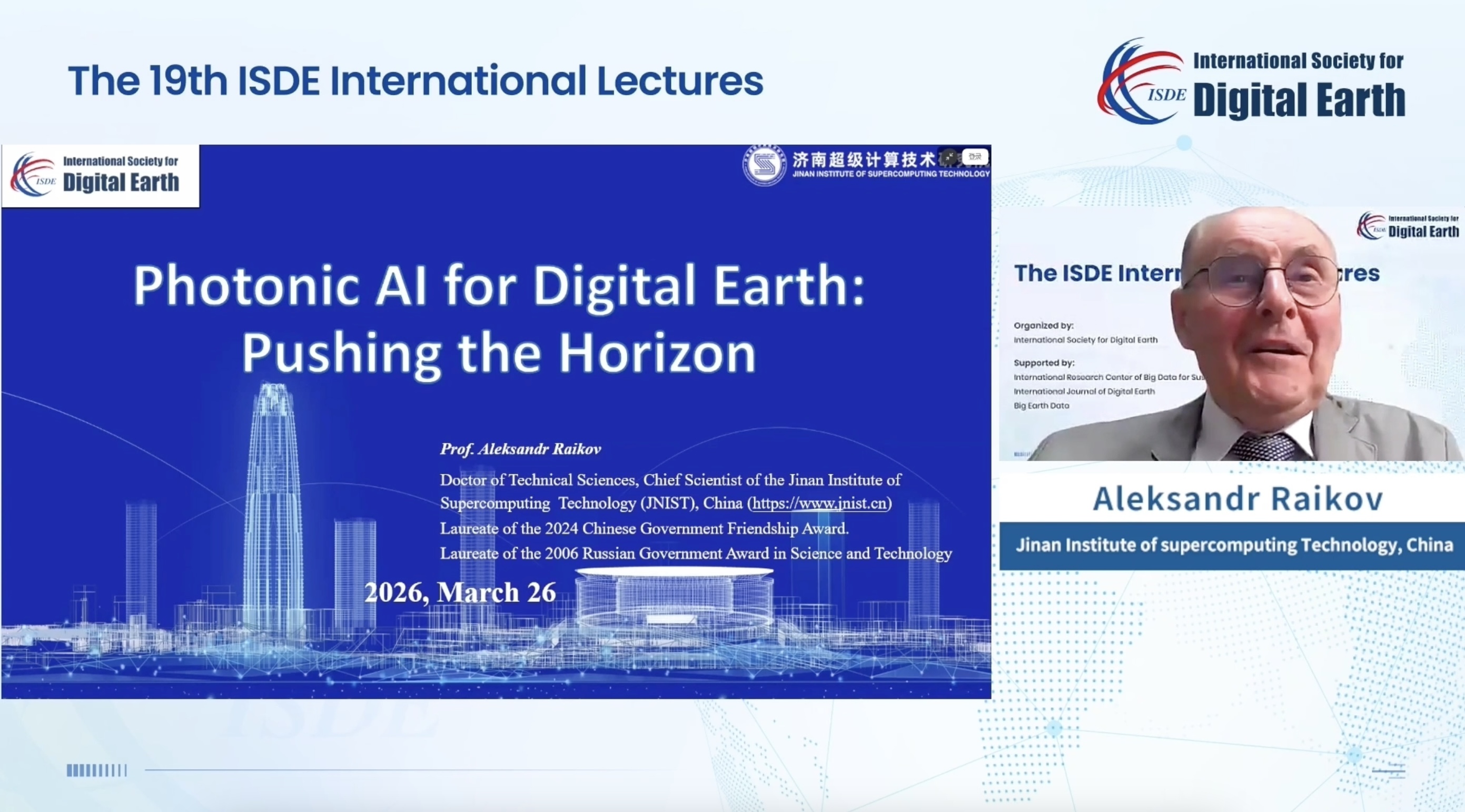
Alexander Raikov, the Chief Scientist of the Jinan Institute of Supercomputing Technology, China, delivered a lecture titled “Photonic AI for Digital Earth: Observing the Horizon.” In his presentation, he addressed the challenge of reducing the time and energy required for artificial intelligence to analyze complex Earth systems. He introduced Photonic AI, which replaces conventional digital data processing with optical tools and leverages holography to bypass multilevel neural networks. This approach enables more efficient solutions to non-standard physical problems that are difficult to address with existing methods and equipment. Alexander noted that Photonic AI could deepen scientific understanding in areas such as the nature of elementary particles and the evolution of proteins, offering new pathways for advanced research.
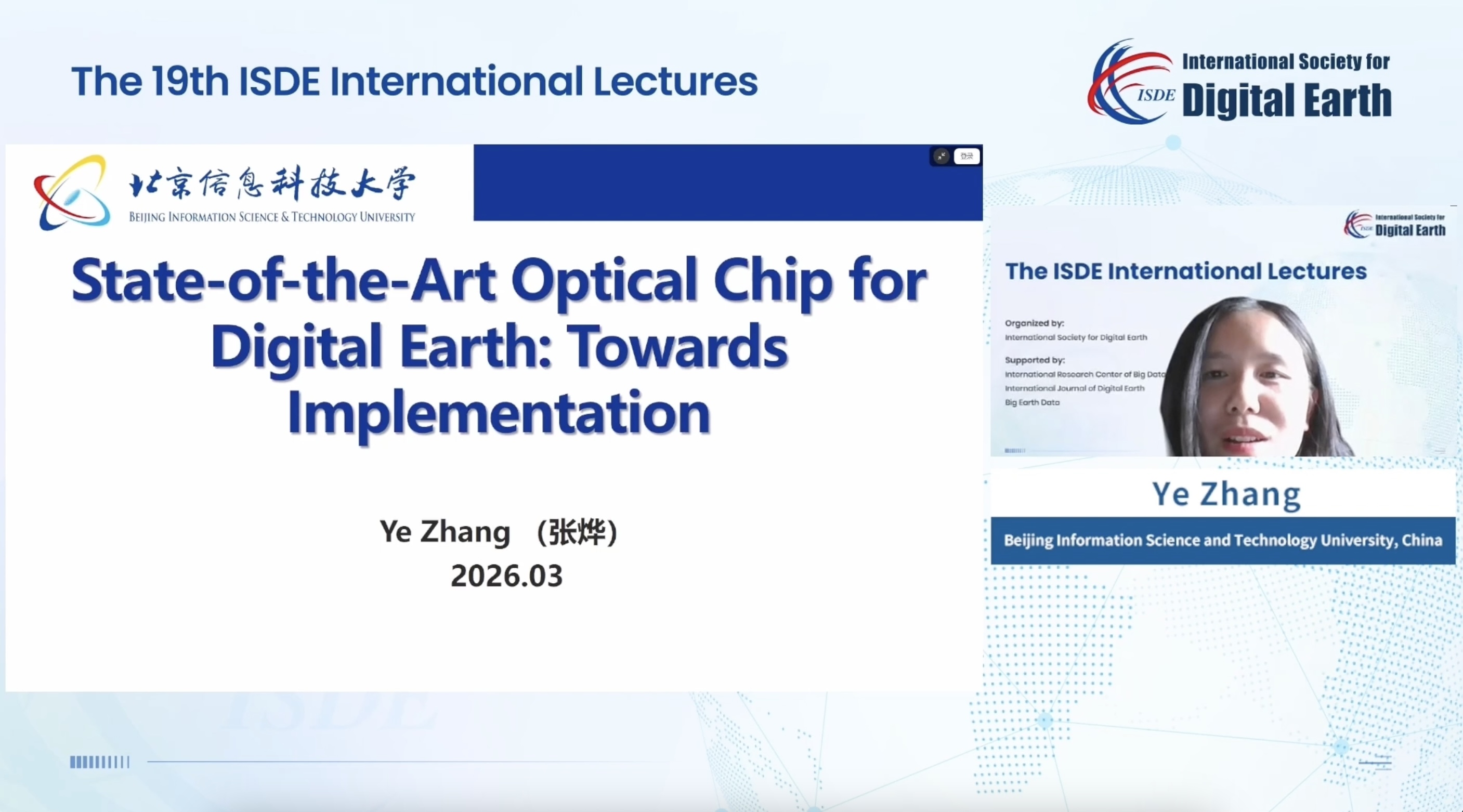
Ye Zhang, an associate professor at the Beijing Information Science and Technology University, China, gave a lecture titled “State-of-the-Art Optical Chip for Digital Earth: Towards Implementation”. She proposed an optical neural network chip for the coherent detection of Earth object structures. By integrating transformation functions into a unified model, the design reduces the need for separate encoding and decoding processes, significantly improving computational efficiency while maintaining high accuracy compared to traditional digital optical methods. The chip has been tested across multiple image classification datasets and has reached a practical level of manufacturing readiness. Dr. Zhang also highlighted its strong robustness and flexible network architecture, underscoring its potential for real-world applications.
The event was moderated by Eugene Eremchenko, and attracted over 3,600 participants from around the world through platforms such as Zoom and the ISDE Bilibili channel.
The ISDE International Lectures are organized by the International Society for Digital Earth (ISDE) and supported by the International Research Center of Big Data for Sustainable Development Goals (CBAS). It is a series of online events which feature invited lectures by well-known international experts in the field of Digital Earth. The purpose of the events is to bring international scholars in the relevant research fields of Digital Earth together to exchange academic perspectives, share research results, and disseminate the most cutting-edge concept of Digital Earth.