NEWS

On the morning of June 1, 2026, the Special Session on Digital Technologies Driving Global Sustainable Development was convened in Huangshan, Anhui Province, China during the 5th Huangshan Dialogue on UNESCO-designated Sites and Sustainable Development. Against the backdrop of rapid advances in digital technologies, the session focused on how geospatial technologies and AI are reshaping research paradigms, operational workflows, and decision-making processes. Through a series of transferable cases and technical pathways, the session explored innovative approaches to advancing the conservation of UNESCO-designated sites and promoting global sustainable development. More than 200 representatives from 18 international organizations and 35 countries and regions joined and enriched the 5th Huangshan Dialogue.
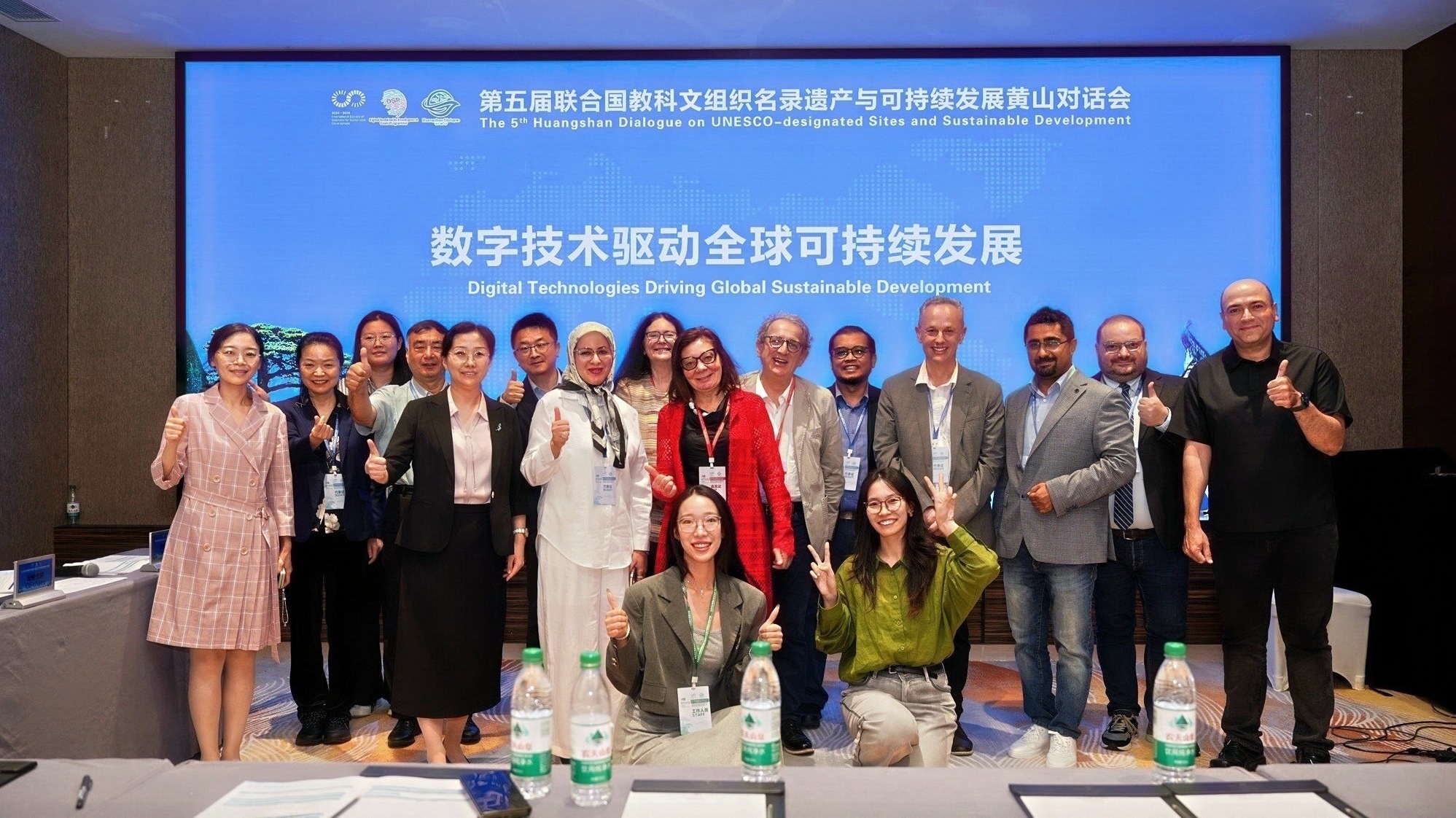
Group photo
The session was co-organized by the International Society for Digital Earth (ISDE) and the International Centre on Space Technologies for Natural and Cultural Heritage (HIST) under the Auspices of UNESCO, with support from many other organizations. Closely aligned with “Digital Technologies Driving Sustainable Development of UNESCO-designated Sites,” the overarching theme of the Dialogue, the session went beyond showcasing innovative solutions for heritage conservation and restoration, further highlighting transferable digital governance approaches and technological wisdom applicable to broader sustainability challenges in the pursuit of UN SDGs.
The session featured seven presentations delivered by distinguished researchers in GIS, GeoAI, remote sensing, cartography, and related disciplines, including Dr. Artak Piloyan, Associate Professor and Acting Head of the Chair of Cartography and Geomorphology at Yerevan State University, Armenia; Dr. Dacheng Wang, Senior Engineer at the Aerospace Information Research Institute, Chinese Academy of Sciences; Dr. Omid Ghorbanzadeh, Senior Scientist, Lecturer and Project Co-Leader at the University of Salzburg, Austria; Dr. Mohd Nadzri Md Reba, Deputy Dean and Associate Professor at Universiti Teknologi Malaysia; Prof. Pedro Cabral, Full Professor at the Nanjing University of Information Science & Technology (NUIST), China; and Dr. Hamed Karimian, Associate Professor at Jiangsu Ocean University, China. Prof. Mario Santana Quintero from Carleton University, Canada delivered a video presentation.

Session presentations
The presentations addressed a wide range of pressing global challenges, including green space injustice, complex land-use dynamics, insufficient platform service capacity, imbalanced satellite data distribution in carbon mapping, illegal artisanal and small-scale mining (ASM), planetary health risks, data limitations and ethical concerns surrounding AI-enabled ecosystem services monitoring, aquatic ecological degradation, and threats to cultural heritage documentation and preservation.
At the same time, speakers demonstrated significant progress in tackling these issues through advanced Earth Observation technologies, GeoAI breakthroughs, Digital Twin applications, and the growing integration of the EO–Policy–Health nexus. Their presentations highlighted how multi-source satellite data fusion, AI-assisted geospatial analytics, and near real-time environmental monitoring are enabling more adaptive, evidence-based sustainability governance. Applications such as geospatially integrated models and AI-driven risk prediction systems are also accelerating the transition from static heritage protection toward dynamic, intelligent, and predictive management models.
These technological innovations, together with the evolving decision-making paradigms they support, are driving the exponential growth of the sustainability sector while contributing to the well-being of both natural ecosystems and human communities. The session was co-chaired by Prof. Changlin Wang, Vice President of ISDE, and Prof. Pedro Cabral.
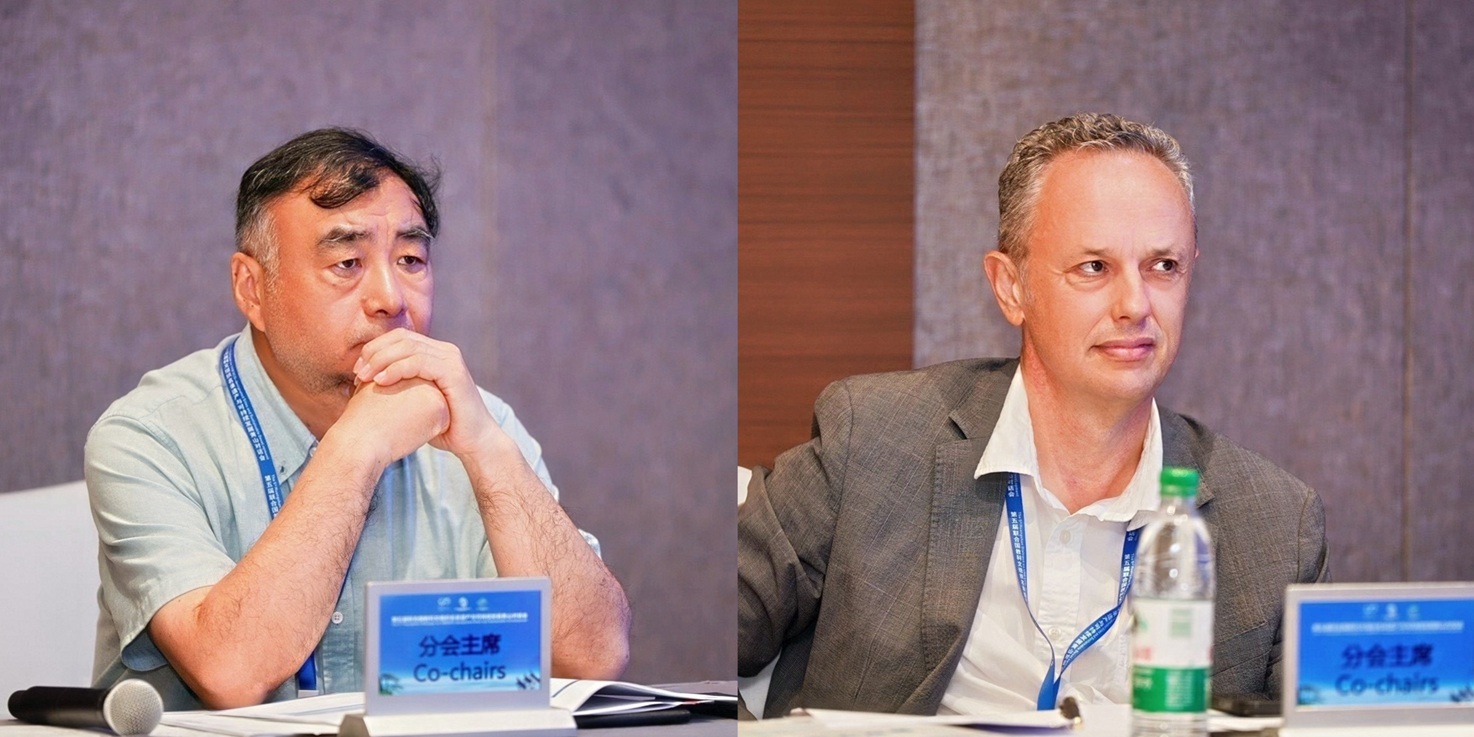
Session chairs
At the Dialogue, a series of collaborative agreements on heritage conservation were signed. The Report on the Global Assessment of Climate Change Impact on UNESCO-designated Sites, compiled by UNESCO and HIST, was endorsed by all delegates. The event was also marked by the release of the Remote Sensing Dynamic Monitoring Atlas of Global World Cultural Heritage (2020-2025), and the official launch of the Huangshan Action Plan for Empowering Sustainable Development through UNESCO-designated Sites.
The Dialogue was hosted by the International Centre on Space Technologies for Natural and Cultural Heritage (HIST) under the Auspices of UNESCO, International Research Center of Big Data for Sustainable Development Goals (CBAS), Aerospace Information Research Institute, Chinese Academy of Sciences, Department of Culture and Tourism of Anhui Province, and Huangshan Municipal People’s Government. It was co-hosted by the United Nations Educational, Scientific and Cultural Organization (UNESCO), and the International Society for Digital Earth (ISDE). Mt. Huangshan Administrative Committee, and the Secretariat of China Mountain Tourism Alliance organized this event.