NEWS

The 3rd International Symposium on Geo-Hazards Perception, Cognition and Prediction (ISGHPCP 2026) was held in Changsha, China, from June 16 to 18, 2026. Focusing on multi-source Earth observation and artificial intelligence-driven full-chain prevention and control of geo-hazards, the symposium brought together more than 150 experts, scholars, young researchers, and industry practitioners from 12 countries worldwide in the fields of geo-hazards, Digital Earth, remote sensing and surveying. It established an open academic exchange platform oriented toward cross-border disaster reduction, opening new avenues for international cooperation in mitigating global geo-hazard risks through spatial information technologies. The symposium was hosted by Central South University, China, organized by the School of Geosciences and Info-Physics, Central South University, China, and the Geo-Hazards Perception, Cognition and Prediction Laboratory, and co-organized by the International Society for Digital Earth, Beijing Normal University, China, the Institute of Geographic Sciences and Natural Resources Research of the Chinese Academy of Sciences, Chengdu University of Technology, China, and the University of the Punjab, Pakistan, along with other domestic and international institutions. Professor Lixin Wu of Central South University, China served as the General Chair of the symposium.
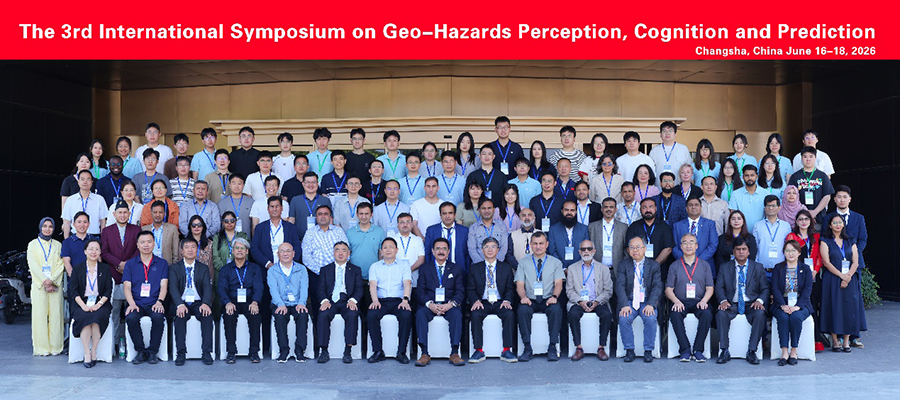
Group photo
The opening ceremony was held on the morning of June 17. Professor Yong Jiao, the Vice President of Central South University, China, delivered a welcoming address, introducing the university's disciplinary heritage and international cooperation layout in geosciences, remote sensing, and geo-hazards. He noted that this symposium serves as a high-level dialogue window for the university's commitment to global disaster reduction, and expressed the expectation that digital Earth technologies would promote transnational collaborative disaster prevention and control.
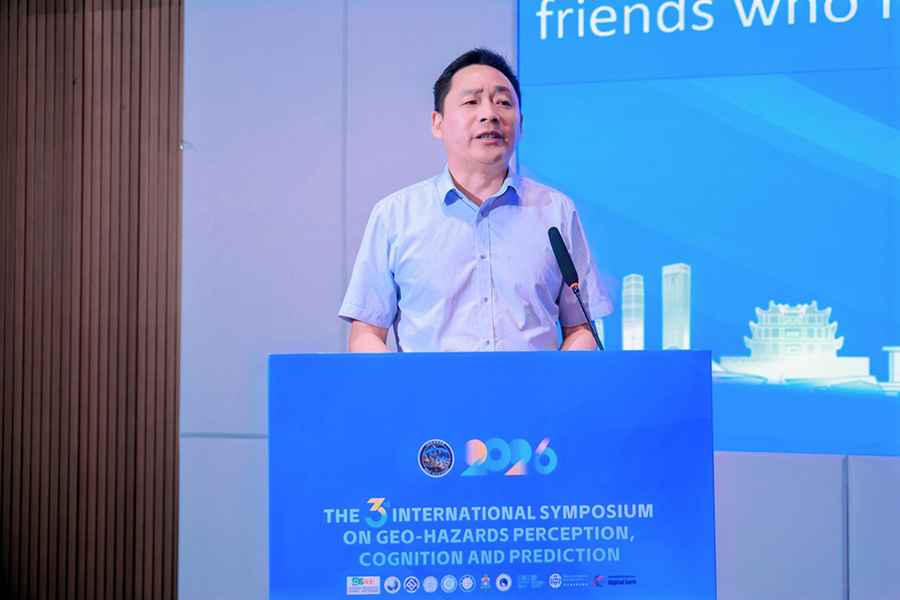
Professor Yong Jiao, Vice President of Central South University, delivered a welcoming address
Professor Muhammad Ali, Vice Chancellor of the University of the Punjab, Pakistan, delivered an address that contextualized the current status of cross-border glacial, landslide, and flood disasters in Pakistan, South Asia, and Central Asia. He called upon all nations to deepen the sharing of space-based observation data and joint talent cultivation, and to join hands in addressing the frequent compound geo-hazards in Global South countries.
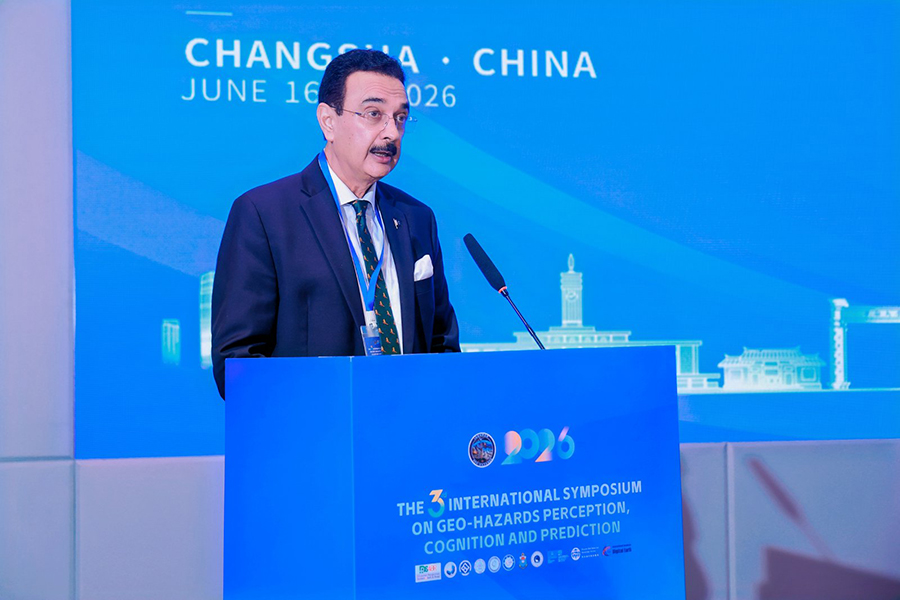
Professor Muhammad Ali, Vice Chancellor of the University of the Punjab, Pakistan, delivered an address
Professor Changlin Wang, Vice President of the International Society for Digital Earth, delivered an address reviewing the Society's more than two decades of efforts in advancing the application of Digital Earth technologies to disaster risk reduction. He reaffirmed that the Society will continue to leverage international conference platforms to mobilize global scientific research forces, export core Digital Earth technological solutions in remote sensing, InSAR, and geospatial big data, and contribute to the United Nations Sustainable Development Goals and global disaster reduction actions.
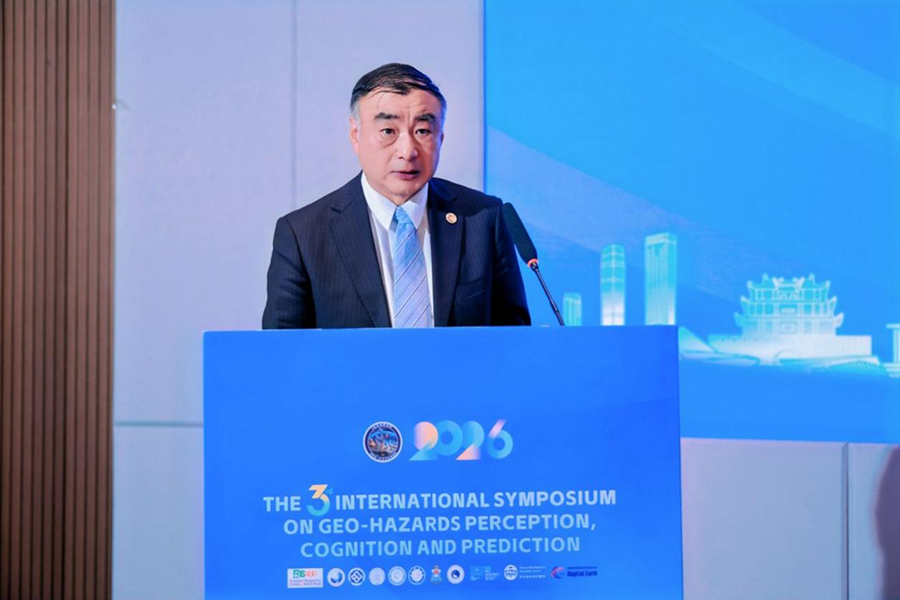
Professor Changlin Wang, Vice President of the International Society for Digital Earth, delivered an address
Following the opening ceremony, distinguished keynote speakers from multiple fields worldwide presented cutting-edge breakthroughs. Professor Muhammad Ali of the University of the Punjab discussed the impacts of natural hazards on biodiversity and ecosystems, analyzing climate change-driven disaster chain transmission mechanisms. Professor Xinjian Shan of the Institute of Earthquake Forecasting, China Earthquake Administration, shared innovative applications of modern geodetic technologies in strong earthquake disaster prediction, demonstrating operational GNSS and InSAR crustal deformation monitoring systems. Professor Ramesh P. Singh of Chapman University, USA, systematically reviewed satellite-ground collaborative observation systems and proposed an integrated monitoring and early warning technical framework for global disasters. Dr. Jafar Niyazov of the Institute of Water, Energy and Environmental Problems, Tajikistan, used the Panj River basin as a case study to illustrate pathways for cross-border geo-hazard risk assessment supported by remote sensing and cloud-platform analysis. Professor Lixin Wu of Central South University, China systematically elaborated on the integrated "Perception–Cognition–Prediction" geo-hazard research framework, introduced the laboratory's multi-year scientific achievements in multi-source observation and intelligent early warning of earthquakes, landslides, glacial lake outburst floods, and mining geo-hazards, and proposed the establishment of a long-term international joint research mechanism.
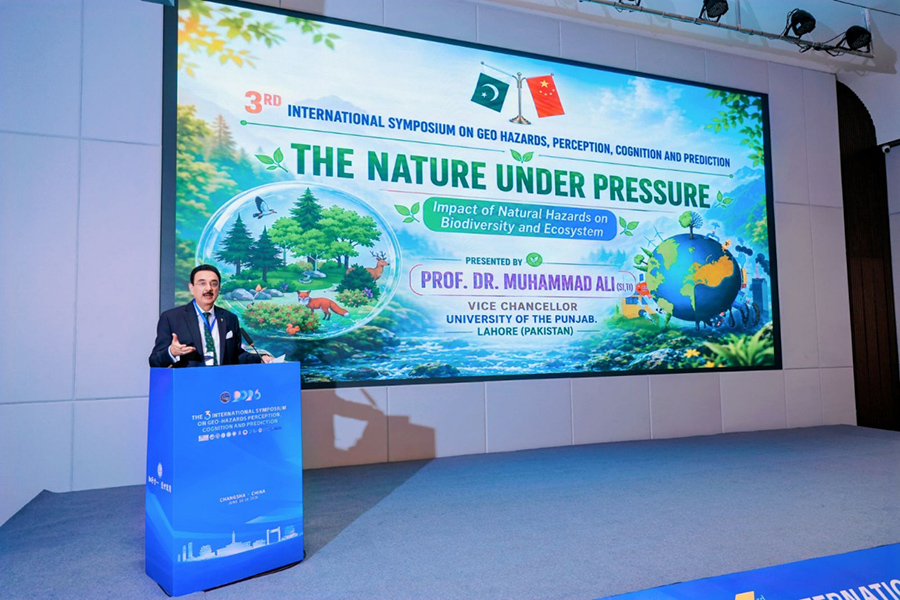
Professor Muhammad Ali, Vice Chancellor of the University of the Punjab, gave a keynote speech
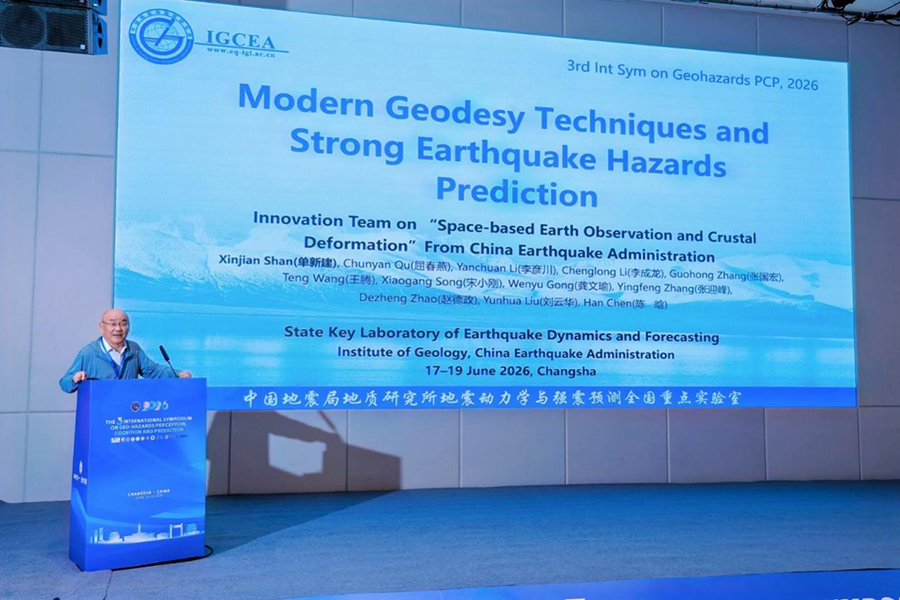
Professor Xinjian Shan, Institute of Earthquake Forecasting, China Earthquake Administration, gave a keynote speech
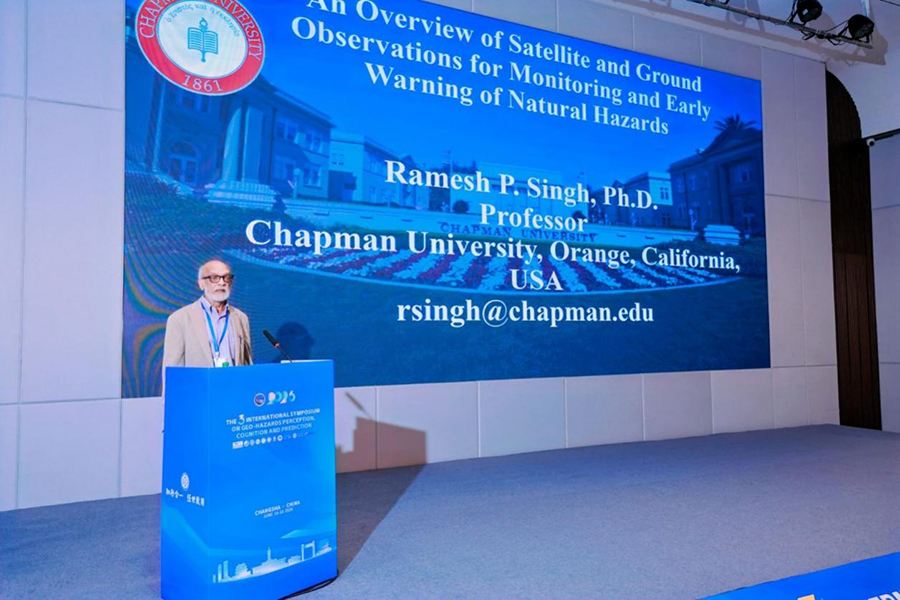
Professor Ramesh P. Singh, Chapman University, USA, gave a keynote speech
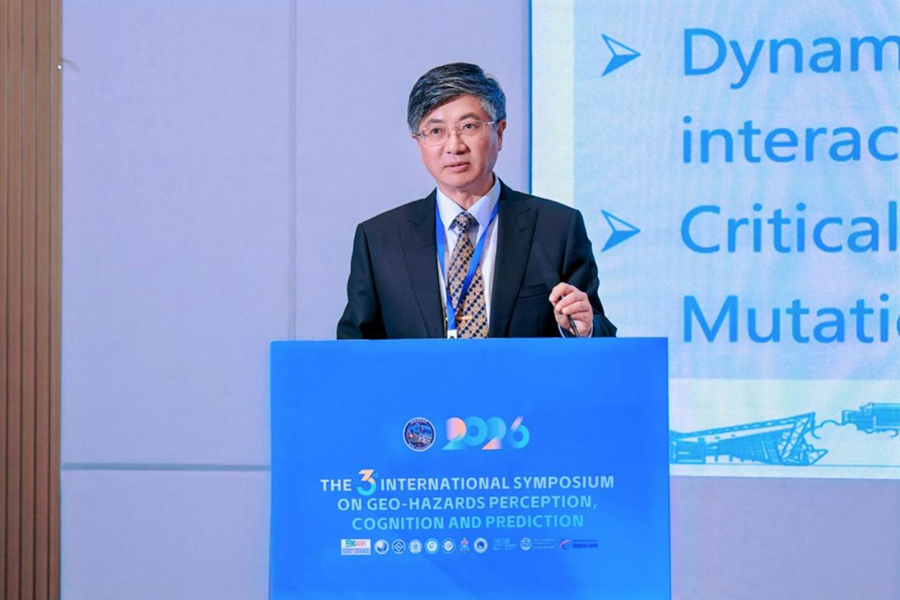
Professor Lixin Wu, Central South University, gave a keynote speech
The symposium featured nine parallel thematic sessions covering the full-chain core directions of geo-hazard research, encompassing more than 100 oral presentations and invited lectures, complemented by a poster exhibition zone showcasing the latest scientific achievements of young scholars. The sessions included: Earthquake Precursor Perception and Mechanism Analysis; Landslide Susceptibility Mapping and Risk Analysis; Drought and Flood Disaster Risk Analysis and Prevention; Wildfire and Volcanic Disaster Assessment and Management; Emergency Response and Disaster Loss Assessment; Disaster Knowledge Services and Information System Construction; Human-Activity-Induced Geo-Hazards; Glacial Hazards and Cryosphere Evolution; and Early Identification and Intelligent Monitoring and Early Warning of Major Geo-Hazards. The session discussions balanced theoretical innovation with practical implementation: scholars from various countries conducted in-depth exchanges on core digital Earth technologies including InSAR surface deformation monitoring, UAV real-scene mapping, Earth Engine cloud platforms, geo-artificial intelligence, knowledge graphs, and machine learning-based hazard identification. Case studies covered the China–Pakistan Economic Corridor, the Himalayan region, the Qinghai–Tibet Plateau, Central Asian river basins, and the Mekong River basin in Southeast Asia, among other global priority disaster zones. Participants shared localized solutions for typical hazards such as mining subsidence, glacial lake outbursts, strong earthquake-triggered landslides, and urban waterlogging.
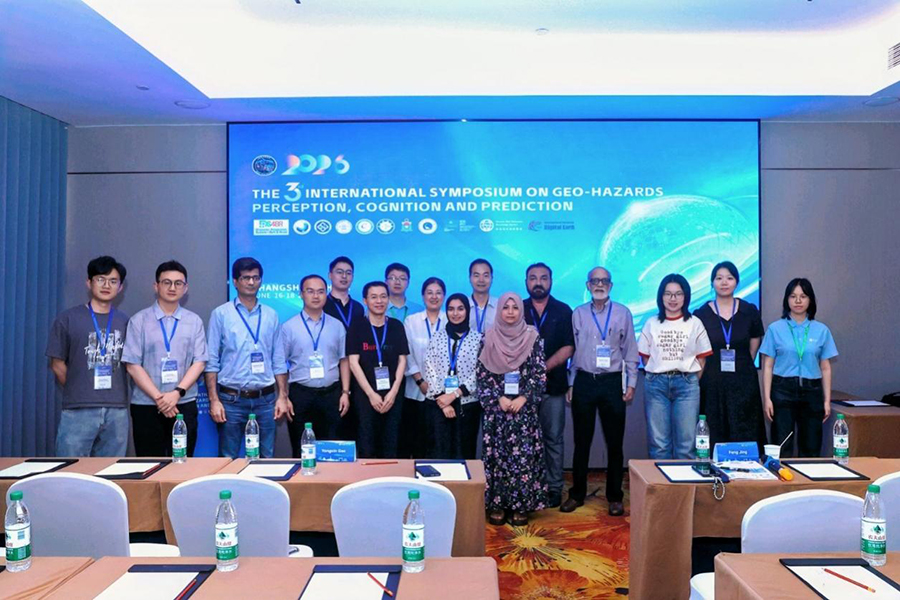
Group photo at a parallel session
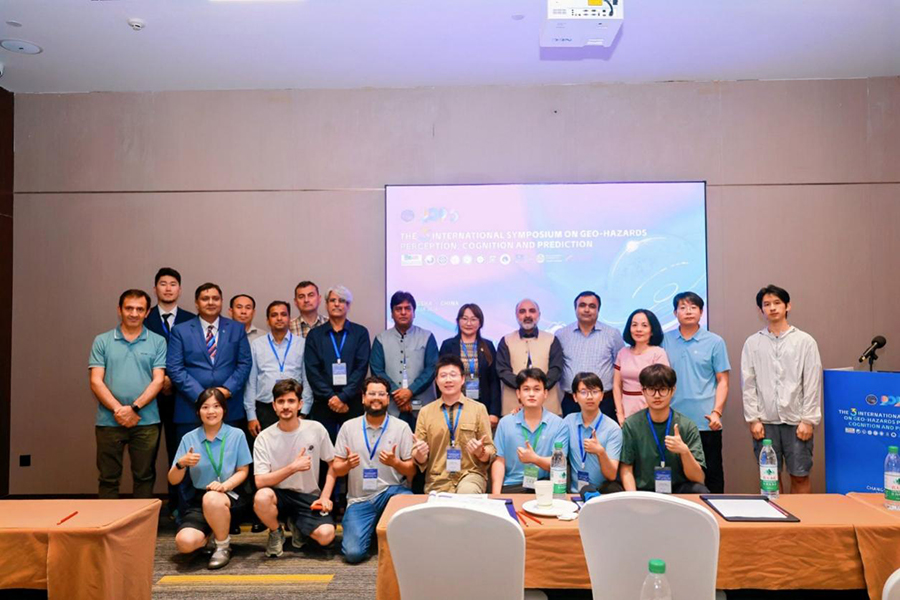
Group photo at a parallel session
The closing ceremony was held on the afternoon of June 18. The ceremony began with an awards ceremony to recognize young scholars who delivered outstanding oral presentations at the symposium, encouraging young research forces to devote themselves to global geo-hazard prevention and control research. Subsequently, General Chair Professor Lixin Wu officially released the Changsha Declaration on Spatial Info-Technologies for Disaster Risk Reduction, which was jointly discussed and signed by representatives from 11 participating countries. Leveraging the platform of the International Society for Digital Earth, the Declaration calls upon global scientific research institutions and national disaster reduction management departments to fully exploit the value of Digital Earth technologies such as satellite remote sensing, geospatial big data, and artificial intelligence, to build cross-border disaster data sharing platforms, and to establish normalized mechanisms for international talent exchange, joint experiments, and joint early warning demonstration projects. The symposium flag was handovered from Central South University, China to the University of the Punjab, Pakistan, the host of the 4th International Symposium on Geo-Hazards Perception, Cognition and Prediction, which will be held in Pakistan in 2027.
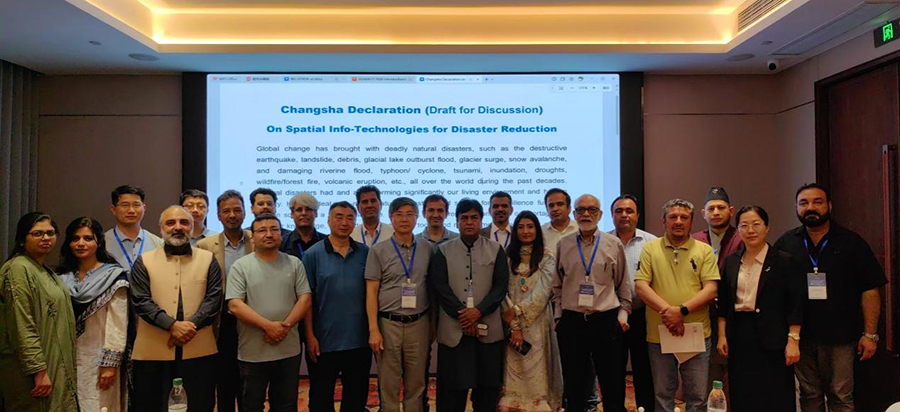
Group photo of the panel for the Changsha Declaration on Spatial Info-Technologies for Disaster Risk Reduction

Symposium flag handover ceremony
The 3rd International Symposium on Geo-Hazards Perception, Cognition and Prediction marks a significant milestone in the international academic cooperation for geo-hazard disaster reduction. It has established vital channels for scientific research exchanges on geo-hazards, connecting researchers from China, Central Asia, South Asia, Southeast Asia, Europe, and the Americas. The symposium showcased technological innovation achievements in multi-source space-air-ground observation, geo-intelligence, and big Earth data across the entire "Perception–Cognition–Prediction" workflow of geo-hazards. The Changsha Declaration outlined a concrete action framework for global disaster reduction cooperation leveraging Digital Earth technologies. Building on the exchange network fostered by this symposium, the International Society for Digital Earth will continue to facilitate joint observation initiatives, collaborative model development, and field-based disaster surveys conducted by national research teams. It will also actively expand the international community of young researchers dedicated to applying Digital Earth approaches to disaster risk reduction. With spatial information technology as a core enabler, the Society aims to strengthen global integrated disaster prevention and mitigation capabilities, and to deliver long-term scientific and technological solutions to the increasingly frequent compound geo-hazards emerging under a changing global climate.