NEWS

The 21st ISDE International Lectures, with the theme of “Digitalisation, Decarbonisation and Productivity — BIM, Open Standards and Digital Earth”, took place on 26 August 2026. Bringing together three connected perspectives on Building Information Modelling (BIM), open standards and Digital Earth, the session highlighted a pathway towards a more integrated digital ecosystem where structured and reliable information can move across models, organisations and scales, supported by open standards and connected through the broader Digital Earth vision. Ultimately, this integration can enable more sustainable outcomes and greater public value.

Andrew Curthoys, Chair of the Australasian BIM Advisory Board (ABAB) and a member of the ISDE Extended Council, gave a presentation titled “Two Problems Infrastructure Projects Can No Longer Ignore”. He highlighted how improving infrastructure productivity and reducing whole-of-life carbon rely on a shared foundation: structured, comparable and trustworthy information about assets, materials, quantities, performance and change. Drawing on ABAB’s work, he demonstrated how BIM, when applied as a whole-of-life information process, can support better decision-making, reduce coordination failures and rework, and enable carbon impacts to be assessed and traced throughout the project lifecycle.
He also called on public clients to use procurement, Asset Information Requirements and pilot projects to make carbon and productivity outcomes explicit, measurable and repeatable. He stressed that current projects are usually “data rich but information poor”, and that digitalisation changes the equation by making carbon visible and actionable — tracked, traced and managed from specification through to operation. Technology, he noted, is not the hard part: cultural change and leadership are, and those who embrace change and drive a system-wide response would be the ones to lead the future.
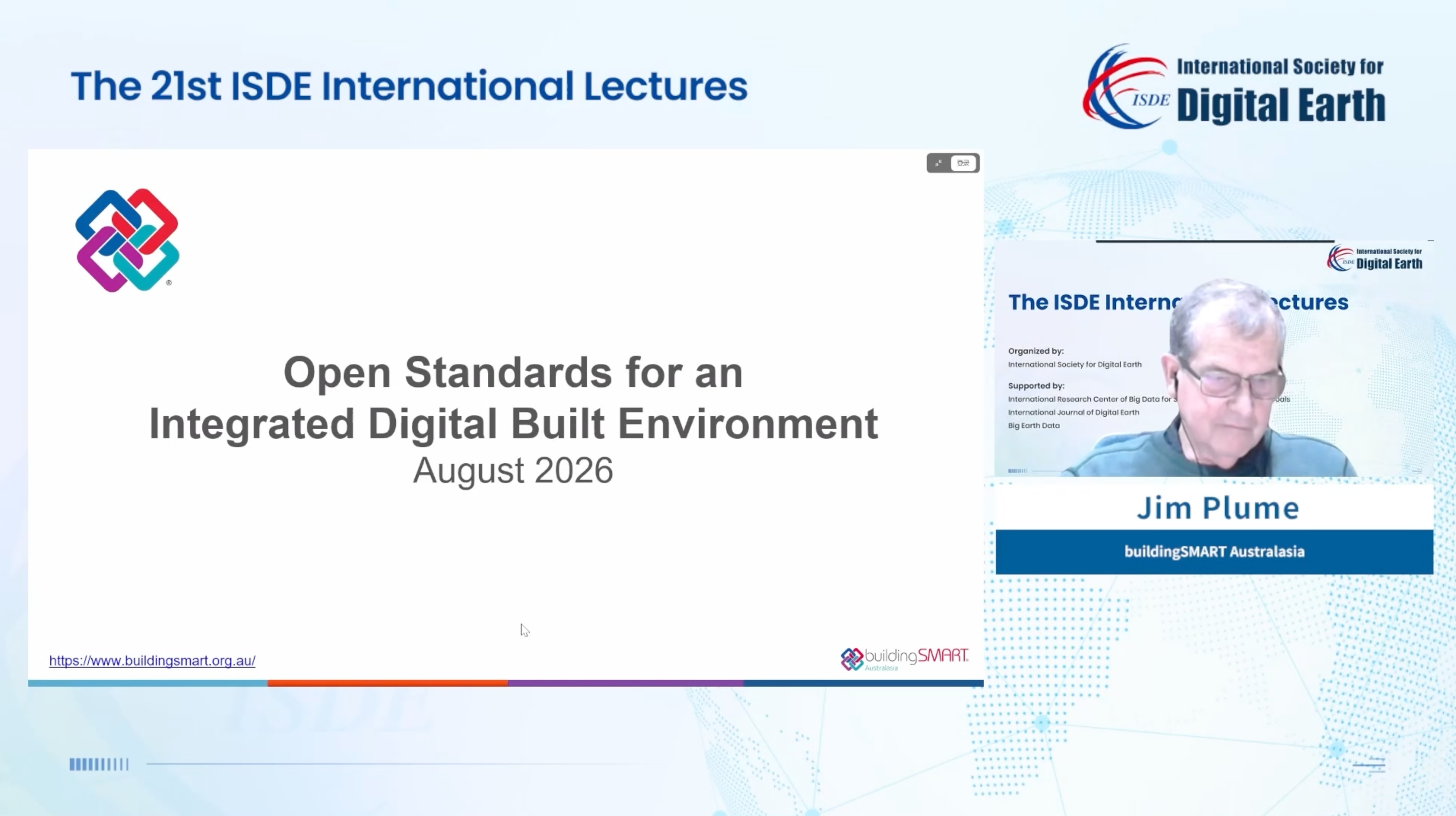
Jim Plume, Board Director and Secretary/Treasurer of buildingSMART Australasia, delivered a presentation titled “Open Standards for an Integrated Digital Built Environment”. He compared the roles and conceptual structures of Industry Foundation Classes (IFC), CityGML and LandInfra/InfraGML, highlighting why their differences in geometry, spatial reference, object identity and lifecycle intent cannot simply be resolved through a single universal schema. Drawing on the joint buildingSMART–OGC work, he explained three practical integration patterns: conversion into a common schema, temporary federation for a defined use case, and links between corresponding objects held in different models. He concluded with an implementation test: standards should be judged by the decisions and workflows they enable, with clear use cases, information requirements, conformance testing and software support. He also indicated that strengthening open and interoperable standards would be instrumental in building a more trustworthy Digital Earth.
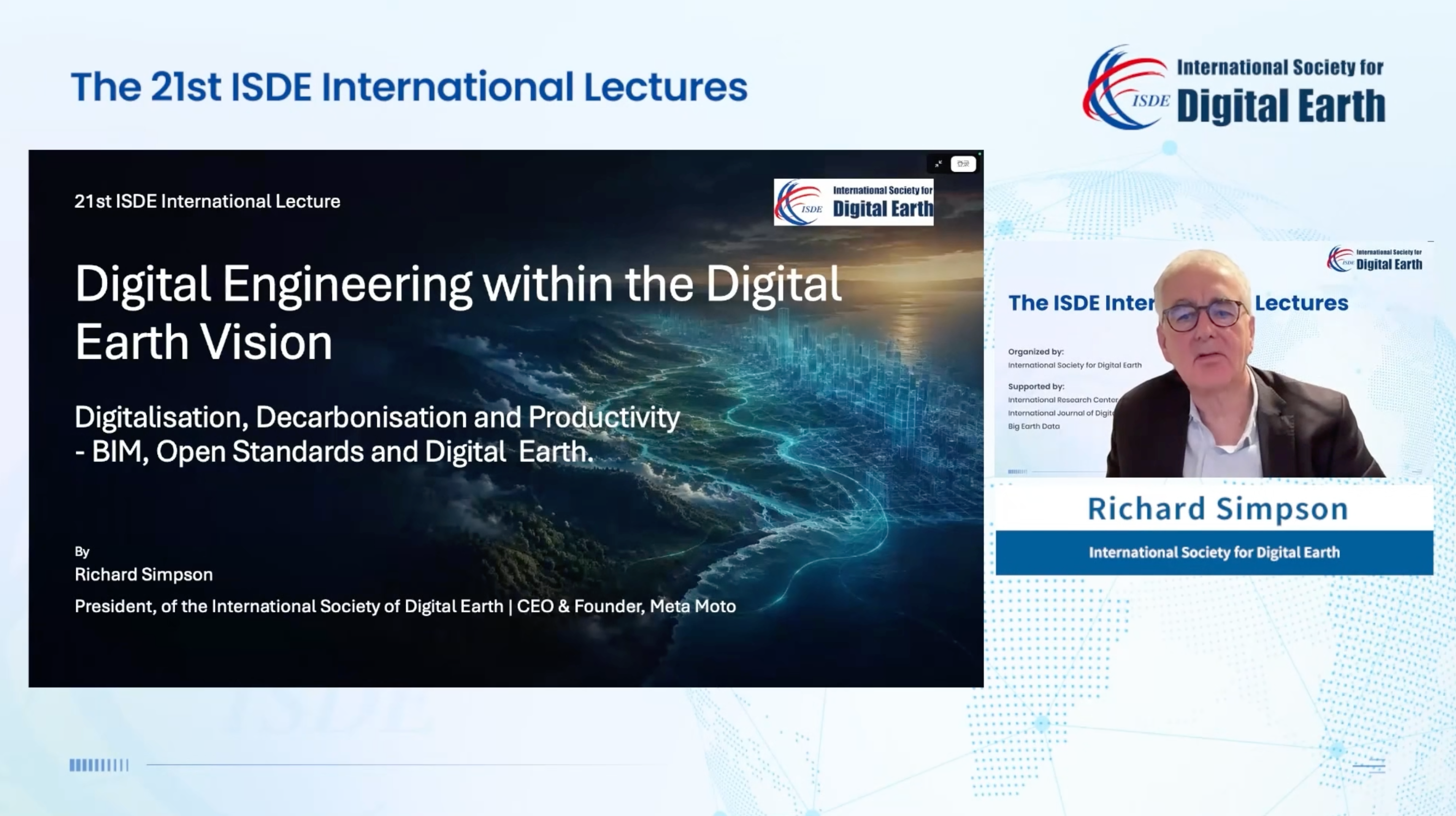
Richard Simpson, President of the International Society for Digital Earth (ISDE) and Founding Director and CEO of Meta Moto, gave a presentation titled “Digital Engineering within the Digital Earth Vision”. Richard explored how BIM and geospatial standards can contribute to the evolving Digital Earth vision by connecting asset-level models with operational data, environmental observations and policy. Highlighting five of the ISDE’s Twelve Thematic Frameworks, he emphasised federated systems, open standards, persistent identifiers and provenance as foundations for integrated analysis. A common data environment, he noted, is not a product bought off the shelf but a suite of tools that can evolve into a digital thread, without which no Digital Twin can be truly mature. He closed with a striking image: a city that senses, remembers and adapts is no longer a set of assets we maintain, but a system we are in conversation with.
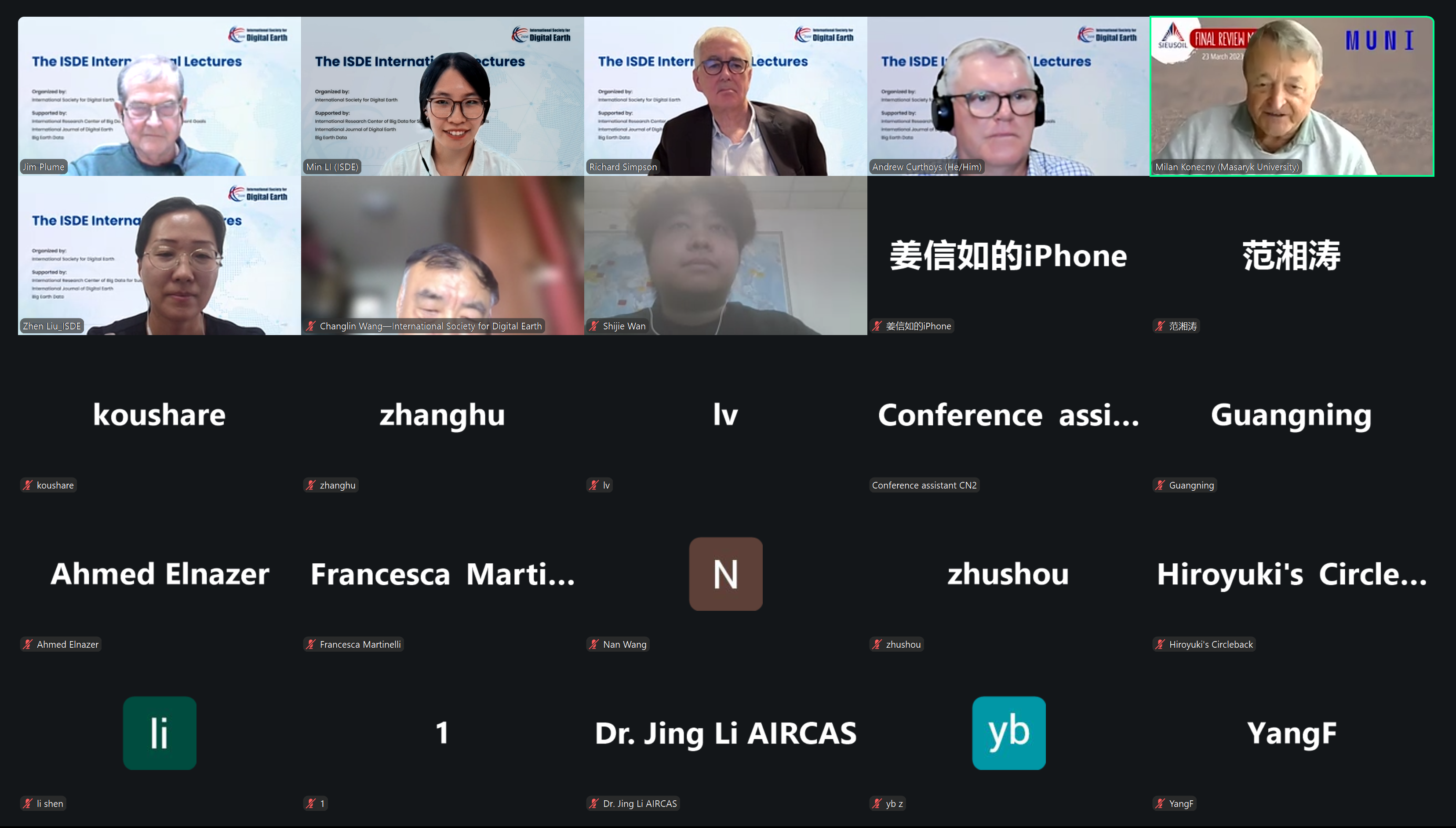
The event was moderated by Andrew Curthoys and attracted over 3,300 scholars and professionals from around the world through Zoom and other academic livestreaming platforms.
The ISDE International Lectures are organized by the International Society for Digital Earth (ISDE) and supported by the International Research Center of Big Data for Sustainable Development Goals (CBAS). It is a series of online events which feature invited lectures by well-known international experts in the field of Digital Earth. The purpose of the events is to bring international scholars in the relevant research fields of Digital Earth together to exchange academic perspectives, share research results, and disseminate the most cutting-edge concept of Digital Earth.